Perfect Idli Dosa Batter (Soft Idli and Crispy Dosa Batter Recipe)
 Introduction
If there is one recipe that every South Indian kitchen depends on, it is idli dosa batter. One bowl of fermented batter can become fluffy idlis for breakfast, crisp dosas for dinner, and even uttapams or paniyaram the next day. Once you have a reliable batter recipe, a lot of your weekly meals get easier.
This is the recipe I use when I want soft, pillowy idlis and extra crispy dosas from the same batch. It uses idli rice, urad dal, a little fenugreek and a handful of poha. The poha is my favorite trick, because it makes the idlis noticeably softer and helps the dosas turn golden and crisp.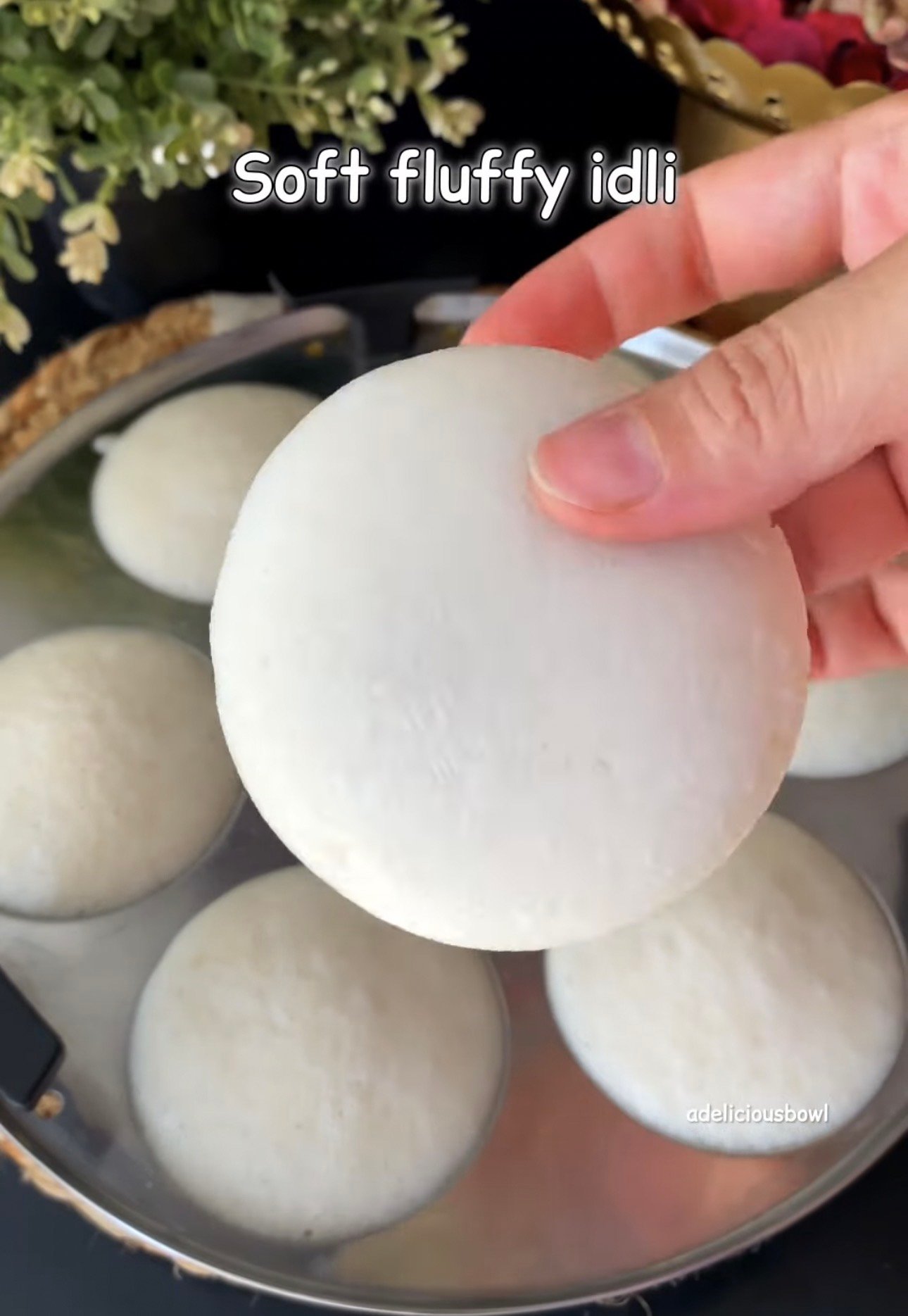
The method is simple: soak, grind, ferment and cook. The only thing you need is patience while the batter ferments. Below you will find the exact quantities, a step-by-step method, fermentation tips for every season, and answers to the most common batter problems.
Why You’ll Love This Recipe
- One batter makes both soft idlis and crispy dosas.
- The poha makes the idlis extra soft and the dosas crisp.
- It uses only a few basic ingredients.
- It works in a regular mixer jar, so a wet grinder isn’t required.
- The batter keeps for several days in the refrigerator.
- It’s the base for many other dishes like uttapam, paniyaram and appam.
What Makes This Batter Work?
Understanding the ingredients helps you get consistent results every time.
- Idli rice: This is parboiled rice that has a high starch content. It gives idlis their structure and gives dosas their crisp edges.
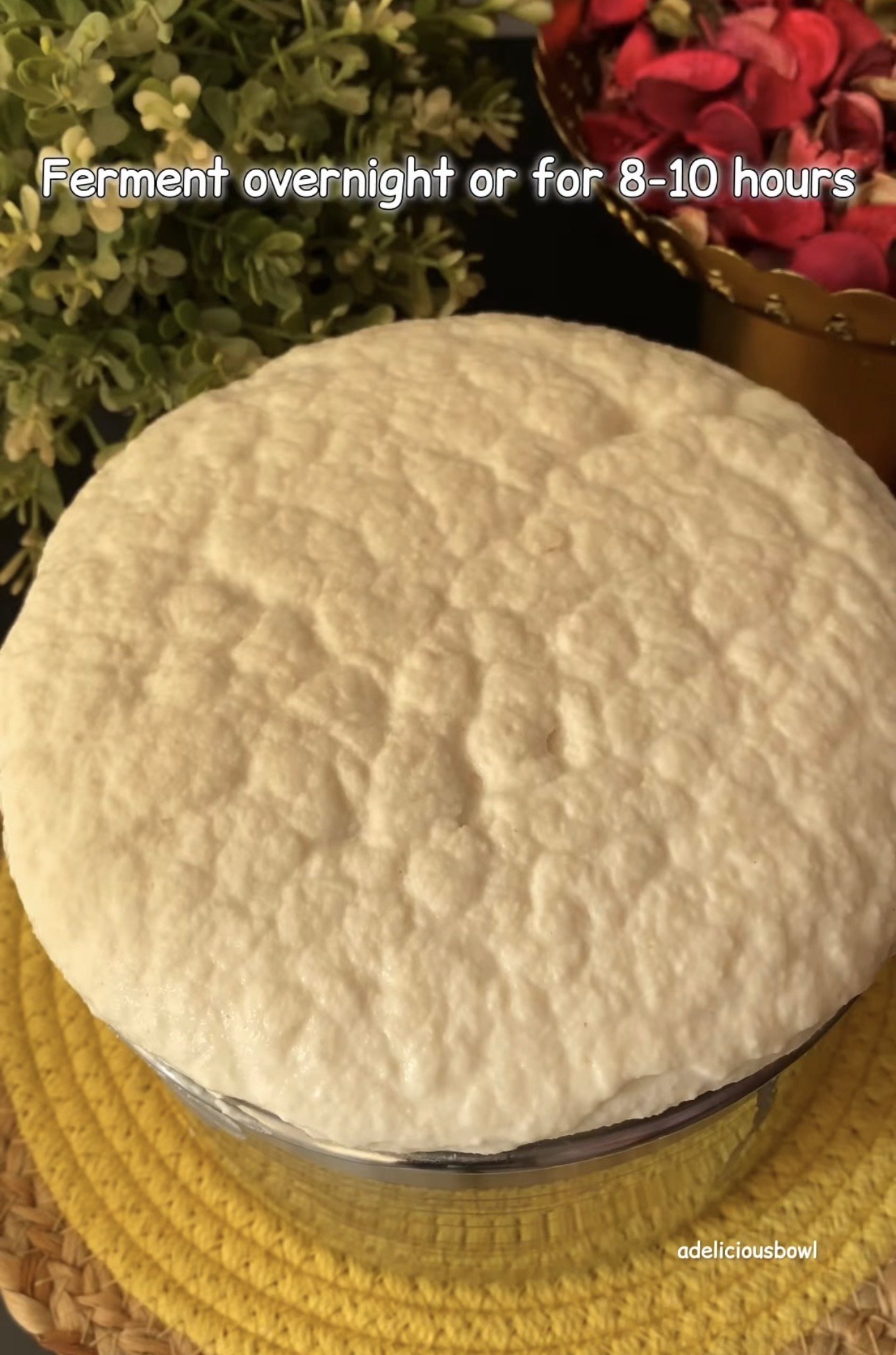
- Urad dal: Whole or split black gram is what makes the batter light and fluffy when it is ground well. It also provides the proteins that support fermentation.
- Fenugreek seeds (methi): They help with fermentation, add a faint aroma, and give dosas a good golden color.
- Poha (flattened rice): It softens the batter and keeps the idlis tender even after they cool down.
- Salt: It seasons the batter and balances the flavor after fermentation.
- Water: Used sparingly while grinding so the batter stays thick and airy.
The ratio in this recipe is 3 parts idli rice to 1 part urad dal, which is a reliable balance for soft idlis and crisp dosas.
Ingredients
- 1 cup urad dal
- 3 cups idli rice
- 1 teaspoon fenugreek seeds (methi)
- ½ cup poha (flattened rice)
- Salt, to taste
- Water, as needed
- Ghee or oil, for greasing the idli moulds and the dosa tawa
Ingredient Notes
- Urad dal: Use fresh dal if possible. Old dal doesn’t ferment as well and may give dense idlis.
- Idli rice: If you can’t find it, use parboiled rice. Regular raw rice won’t give the same texture.
- Poha: Use thick or medium poha. Wash it gently so it doesn’t turn mushy before grinding.
- Salt: Use non-iodized salt like rock salt or sea salt if you can, since iodized salt can sometimes slow fermentation.
- Water: Use clean, cool water for soaking and grinding, never warm or hot water.
Instructions
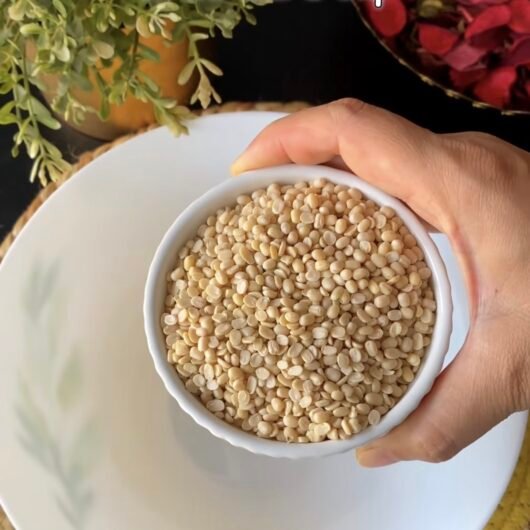
- Wash the rice, dal and fenugreek. Add the urad dal, idli rice and fenugreek seeds to a large bowl. Wash a few times, swirling with your hand, until the water runs clear.

- Soak. Pour in fresh water so it covers the ingredients by 2 inches and soak for 4 to 5 hours.
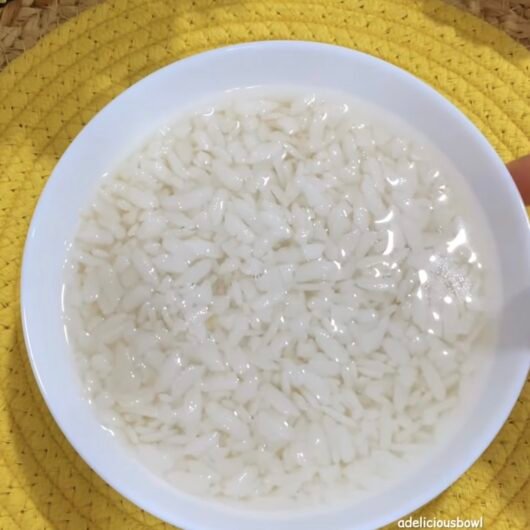
- Soak the poha. About 20 minutes before grinding, wash the poha in a separate bowl and soak it in water.
- Grind the batter. Drain the soaked rice and dal mixture, saving the soaking water. Transfer it to a mixer jar along with the soaked poha. Add water a little at a time and grind to a light, fluffy batter. Work in batches if your jar is small. The batter should be smooth, slightly thick and airy, not runny.
- Collect the batter. Pour the ground batter into a large vessel. Leave plenty of room for it to rise, because it can double in volume.
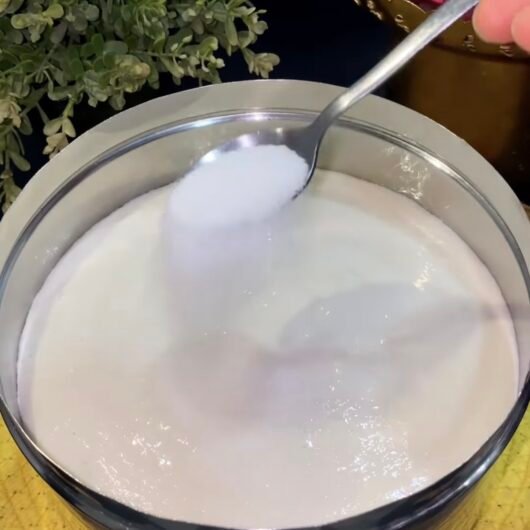
- Add salt and mix. Add salt to taste and mix everything well. Mixing with your hand for a minute or two adds warmth and helps fermentation.
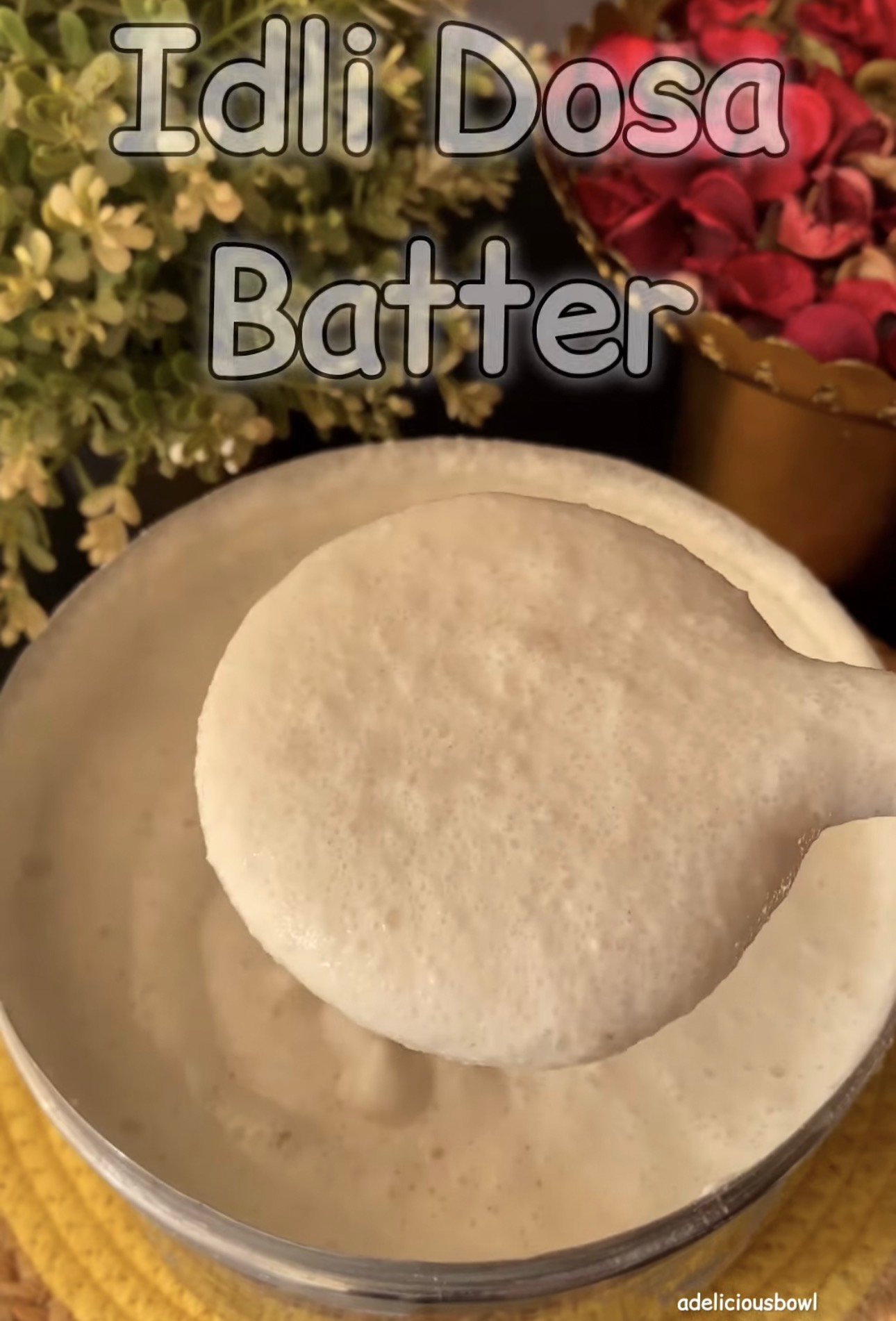
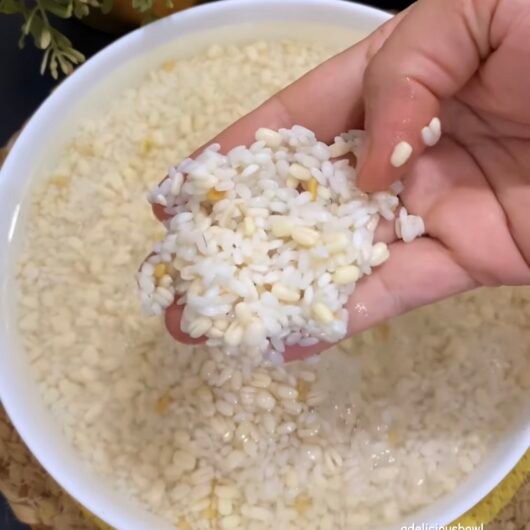
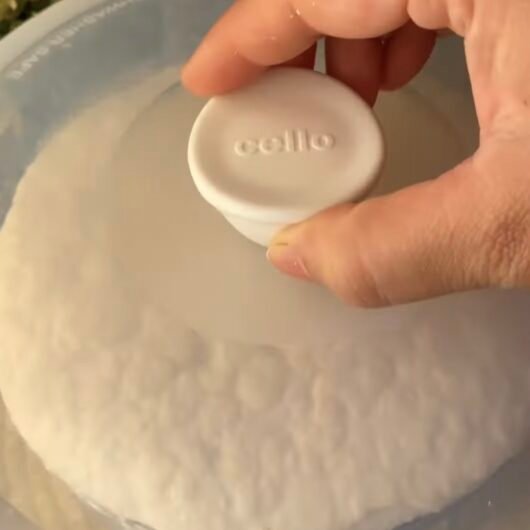
- Ferment. Cover the vessel with a lid and keep it in a warm place for 8 to 10 hours or overnight. The batter is ready when it has risen, looks bubbly and smells pleasantly sour.
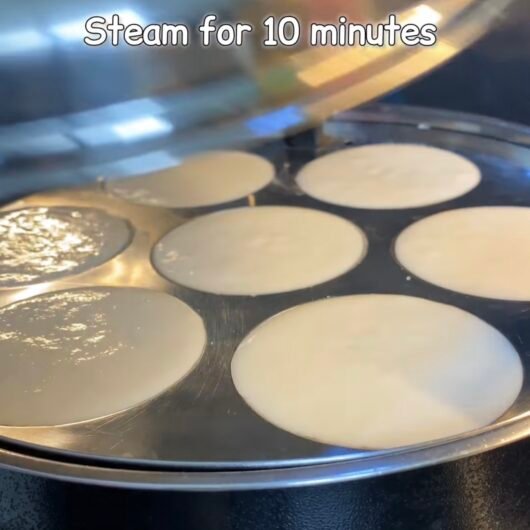
- Make the idlis. After fermenting, stir the batter gently, without beating out the air. Grease the idli moulds with ghee and pour a spoonful of batter into each cavity.
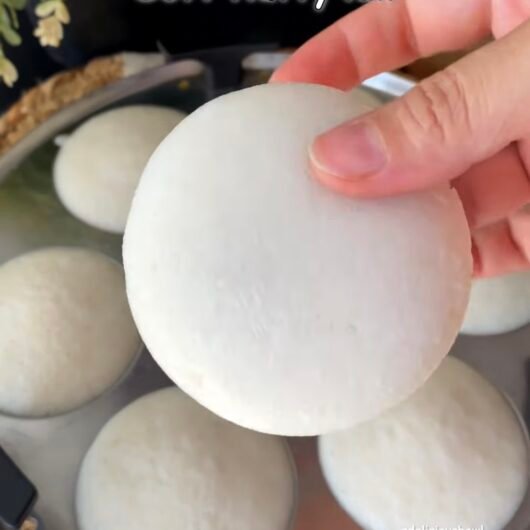
- Steam. Steam in an idli steamer for 10 to 12 minutes, until the idlis are fluffy and cooked through. A toothpick inserted in the center should come out clean.
- Rest and unmould. Let the idlis rest for 2 to 3 minutes, then use a wet spoon to take them out. Serve warm.
To Make Dosas
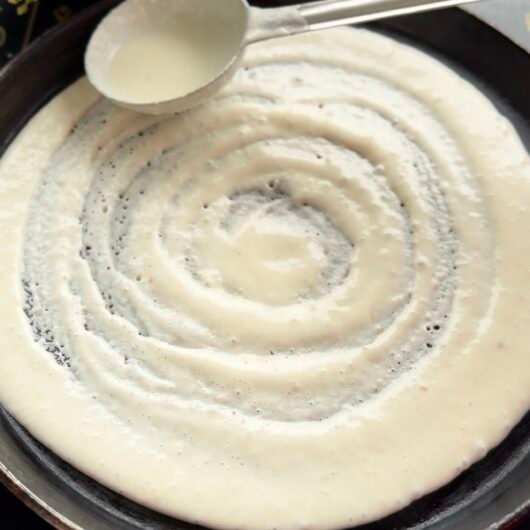
- Take the amount of batter you need in a separate bowl and add a little water to loosen it. It should be pourable, like thin pancake batter.
- Heat a tawa on medium-high heat and grease it lightly.
- Pour a ladleful of batter in the center and spread it outward in a circular motion into a thin round.
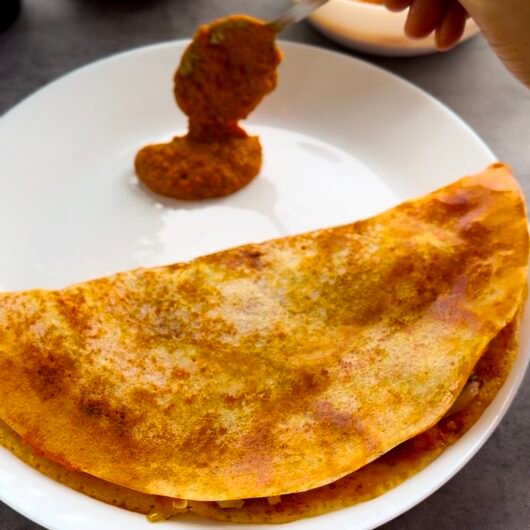
- Drizzle a little ghee or oil around the edges and cook until the underside turns golden and crisp.
- Fold and serve hot, or flip and cook for a few seconds if you like it evenly browned.

Tips for the Perfect Idli Dosa Batter
- Wash until the water runs clear. Excess starch on the surface can make the batter gummy.
- Don’t over-soak. Soaking for more than 6 hours in warm weather can make the dal slimy.
- Use cold water while grinding. Warm water heats the batter and affects fermentation. If your mixer gets hot, grind in short bursts.
- Add water gradually. Too much water makes flat idlis. It’s easier to loosen the batter later than to thicken it.
- Grind until it’s light and fluffy. The batter should look airy, and a small drop should float on water.
- Ferment in a warm place. In cooler weather, keep the vessel in an oven with only the light on, or near a warm spot in the kitchen.
- Leave room to rise. Use a vessel twice the size of the batter to avoid overflow.
- Add salt before fermentation. This makes the batter ferment evenly, and mixing by hand helps.
- Stir gently after fermentation. Don’t beat the batter, or you will lose the air that makes idlis fluffy.
- Grease the moulds well. It helps the idlis come out cleanly.
- Dilute only the portion for dosas. Keep the rest of the batter thick for idlis.
Fermentation Guide
Fermentation time depends on the weather where you live.
- Hot weather: 6 to 8 hours. The batter can over-ferment and turn very sour if left too long.
- Moderate weather: 8 to 10 hours.
- Cold weather: 12 to 14 hours or more, in a warm spot.
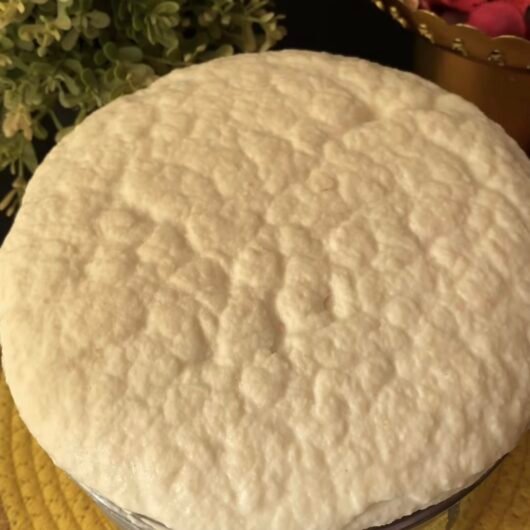
Signs of good fermentation: the batter has risen to almost double its size, has plenty of bubbles on the top, and smells mildly sour.
If the batter doesn’t rise: move it to a warmer spot and wait a few more hours. A spoonful of old fermented batter can help kickstart a fresh batch.
Troubleshooting
Idlis are hard or dense: The batter may be too thin, under-fermented or over-mixed after fermentation. Next time, grind to a thicker, fluffier batter and stir gently.
Idlis are flat: The batter was too watery, or the fermentation was weak.
Dosas are thick or soft: The batter is too thick. Add water a little at a time. Make sure the tawa is hot enough.
Dosas are not crisp: Spread the batter thinner, cook on higher heat, and use a little extra oil at the edges.
Batter is too sour: It fermented too long. Use it for dosas or uttapam, or add a spoonful of rice flour and a little water to balance it.
Dosa sticks to the pan: The tawa needs to be well-seasoned and hot. Wipe it with a cut onion or a little oil before each dosa.
What to Make with This Batter
- Soft idlis
- Crispy plain dosas
- Masala dosas
- Onion or vegetable uttapam
- Paniyaram (appe)
- Mini idlis tossed in podi
- Ghee roast dosas
What to Serve with Idli and Dosa
- Coconut chutney, tomato chutney or peanut chutney
- Sambar
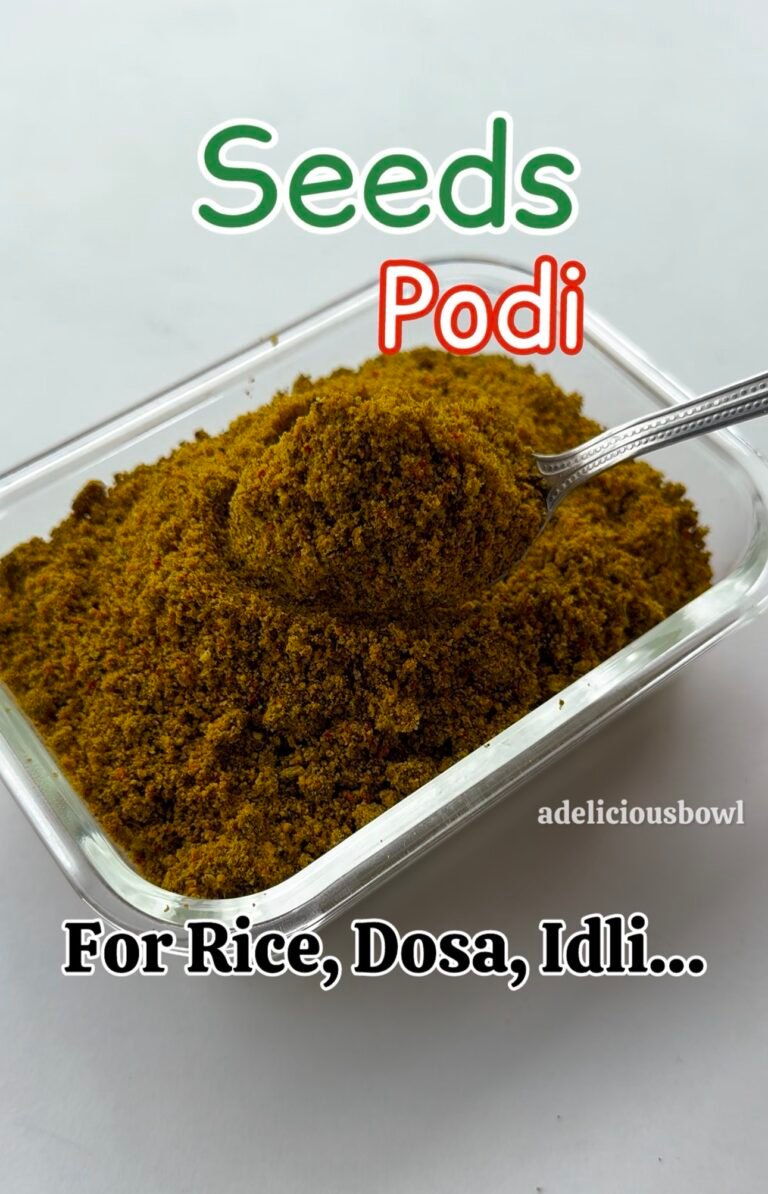
- Seeds podi or sesame podi with ghee or sesame oil
- Potato masala for dosas
Storage
- Batter: Once fermented, store it in the refrigerator in a covered container for up to 4 to 5 days. The batter will turn more sour with time, which suits dosas well.
- Before using: Take it out of the fridge 30 minutes ahead and stir gently.
- Idlis: Cool completely and store in an airtight container in the refrigerator for 2 to 3 days. Re-steam for 2 minutes or microwave with a sprinkle of water.
- Freezing: Steamed idlis freeze well for up to a month. Reheat directly from frozen by steaming.
Frequently Asked Questions
1. Why do you add poha to the batter?
Poha makes the idlis softer and helps dosas turn crisp. It also supports fermentation.
2. Can I make this batter in a regular mixer?
Yes. Grind in batches with cold water and short pulses so the batter doesn’t heat up.
3. How long should I soak the rice and dal?
Soak for 4 to 5 hours. In very warm weather, keep it closer to 4 hours.
4. Do I need to grind the rice and dal separately?
Many people grind the dal separately for extra fluffiness. This recipe grinds them together with the poha for convenience, and it still works well. If you want a fluffier idli, you can grind the dal alone to a light batter and the rice with poha to a slightly coarse texture, then mix them together.
5. Why isn’t my batter fermenting?
The usual causes are cold weather, old dal, or very cold water. Keep the batter in a warm place and be patient. In winter, it can take up to 14 hours.
6. Can I use regular rice instead of idli rice?
Idli rice or parboiled rice gives the best results. Regular raw rice makes idlis that are harder and less fluffy.
7. How do I get crispy dosas?
Use a hot tawa, spread the batter thinly, add a little oil around the edges, and don’t flip until the underside is golden.
8. How long can I store the batter?
Up to 4 to 5 days in the refrigerator, in a covered container.
9. Why are my idlis hard?
They may be over-steamed, or the batter might be too thick or too thin, or poorly fermented. Steam for 10 to 12 minutes and check with a toothpick.
10. Can I add salt after fermentation?
It’s better to add it before. Salt before fermentation helps the batter ferment evenly.
11. Can I make this batter without poha?
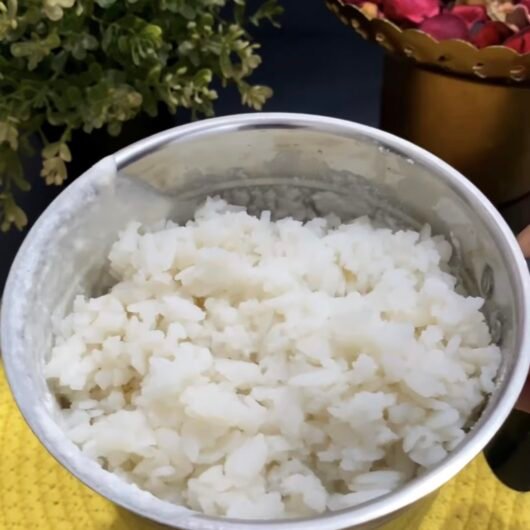
Yes, but the idlis will be slightly less soft. Cooked rice (2 to 3 tablespoons) is a good alternative.
12. How many idlis does this batter make?
About 30 to 35 medium idlis, or roughly 20 to 25 dosas, depending on size.
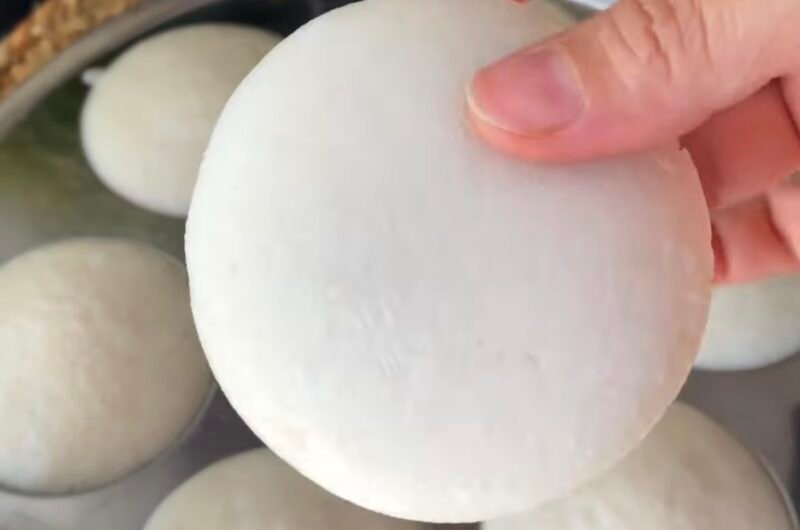
Perfect Idli Dosa Batter
Course: BreakfastCuisine: South IndianAbout 30 to 35 idlis or 20 to 25
dosas30
minutes12
minutes (per batch of idlis)300
kcal5hours
8-10
hoursAbout 14 to 16
hoursCalories: 60 kcal
Values vary with size and ingredientsA reliable idli dosa batter made with idli rice, urad dal, fenugreek and poha. Makes super soft idlis and extra crispy dosas.
Ingredients
1 cup urad dal
3 cups idli rice
1 teaspoon fenugreek seeds
½ cup poha
Salt, to taste
Water, as needed
Ghee or oil, for greasing
Directions
Wash the urad dal, idli rice and fenugreek seeds until the water runs clear. Soak in fresh water for 4 to 5 hours.
Wash the poha and soak it for 20 minutes before grinding.
Drain the soaked ingredients and transfer to a mixer jar with the poha.
Grind to a light, fluffy batter, adding water gradually.
Pour into a large vessel, add salt and mix well.
Cover and ferment in a warm place for 8 to 10 hours or overnight.
Stir the fermented batter gently. Pour into ghee-greased idli moulds.
Steam for 10 to 12 minutes until fluffy and cooked through.
For dosas, add a little water to loosen the batter, pour onto a hot tawa, spread thin and cook until golden and crisp.
Notes:
- Wash the rice and dal until the water is clear.
- Use cold water for grinding so the batter doesn’t heat up.
- Ferment in a warm place and leave room for the batter to rise.
- Stir gently after fermentation to keep the batter airy.
- Store fermented batter in the refrigerator for up to 4 to 5 days.